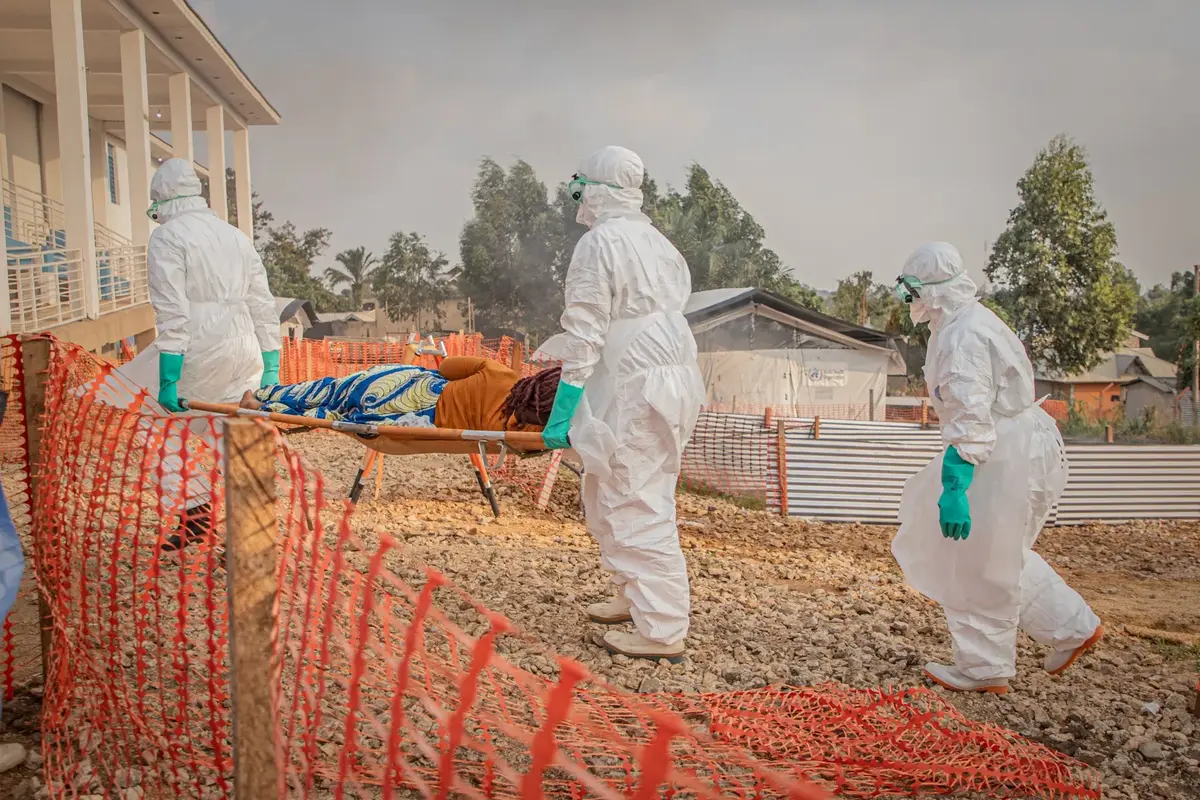
Reuters — The Ebola outbreak in Democratic Republic of Congo has killed 2,325 people, government data showed on Sunday, surpassing the toll from the 2018-2020 outbreak (2,299 deaths) to become the deadliest in the country's history. DR Congo's public health institute said confirmed cases had risen to 4,945, including 101 new cases in the previous 24 hours. The outbreak—DR Congo's 17th—was already the country's biggest by case numbers since late July, and is now dwarfed only by West Africa's 2014-2016 outbreak (28,616 cases, 11,310 deaths across Guinea, Liberia and Sierra Leone, per WHO).
It took nearly five months for that 2014 declaration to hit 1,000 deaths, whereas DRC's current outbreak hit 2,000 deaths in under three months. The case fatality ratio has risen from about 20% in early June to 46%, meaning nearly one in every two confirmed cases now dies. Experts say this does not indicate a more lethal virus but persistent shortcomings in surveillance, case detection and access to care.
"Normally, as an outbreak progresses, the case fatality ratio should fall as contact tracing improves and patients are identified and treated earlier," said Thomas Parisch, a public health specialist recently deployed to DRC with Médecins Sans Frontières. "Instead, we're still seeing many cases detected very late, when treatment is less likely to succeed, with many identified only after they die in the community."
A small number of experimental vaccines and therapies are being evaluated, while global health authorities assess whether existing Ebola treatments could offer protection (evidence limited to animal studies). The outbreak earlier spread to neighboring Uganda, which limited deaths to two and cases to 20 before declaring an end last month. Ebola spreads through direct contact with the bodily fluids of infected people, living or dead; it can cause fever, vomiting, diarrhea and, in severe cases, internal and external bleeding. (Source: edition.cnn.com)