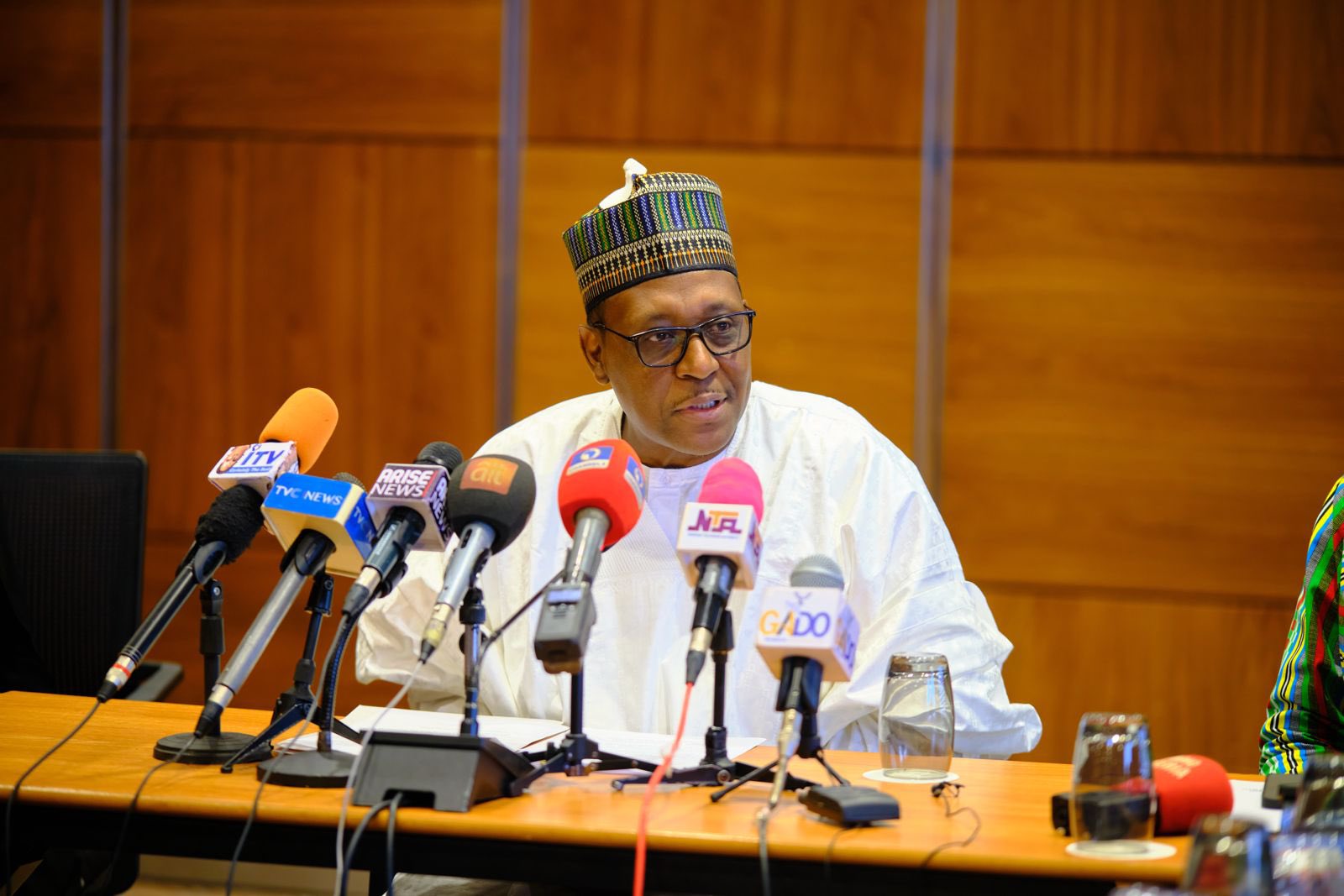
Lagos State Commissioner for the Environment and Water Resources, Tokunbo Wahab, has defended the state’s handling of waste management, rejecting claims that the government lacks a sustainable plan to tackle the problem. Wahab was responding to comments by the African Democratic Congress (ADC) governorship candidate, Gbadebo Rhodes-Vivour, during an appearance on Politics Today with Seun Okinbaloye.
Rhodes-Vivour, who left the Labour Party earlier this year, had raised concerns over waste management and flooding in Lagos as part of his criticism of the state government ahead of the 2027 governorship election. Wahab acknowledged that Lagos still faces waste collection failures and other operational challenges but said the government was implementing measures to address them.
“Lagos generates an estimated 13,000 to 15,000 tonnes of municipal waste daily. In May 2026 alone, LAWMA and PSP operators evacuated approximately 418,500 tonnes, averaging 13,200 tonnes daily,” Wahab said. “These figures underscore the enormous scale of the responsibility. They do not suggest that every resident receives satisfactory service. We acknowledge collection failures, underperforming PSP operators and operational bottlenecks.”
“However, it is misleading to suggest that Lagos has no plan beyond clearing refuse after it accumulates,” he added. The commissioner explained that waste management involved several interconnected stages, warning that problems at disposal facilities could disrupt collection across the city. “Delays at disposal facilities affect truck turnaround, disrupt collection schedules and eventually create refuse accumulation across neighbourhoods,” he said.
Wahab cited improvements at the Olusosun disposal facility following the rehabilitation of Road E and the provision of additional disposal platforms. “Truck movements across disposal facilities rose to 1,866 in the week following the intervention, while Olusosun recorded an increase from 574 to 1,012 trips,” he said. Beyond emergency evacuation of accumulated refuse, Wahab said the state was investing in modern transfer loading stations, material recovery facilities, recycling, composting and the Epe waste-to-energy project.
“The objective is to transition from decades of pick-and-dump practices to a sustainable system where waste becomes a resource for energy and economic value,” he said. On accountability and data, Wahab said the government was strengthening its monitoring systems to determine whether waste operators were actually delivering the services for which they were contracted. “A modern waste management system must measure what it manages,” he said.
“We are strengthening property enumeration, geocoded service locations, GPS tracking, weighbridge measurements, collection records and recovery data.” He added that underperforming operators would face sanctions, including termination where necessary. Wahab said the performance of the waste management system should be judged by measurable outcomes rather than political descriptions.
“Does every household have an assigned waste collector? Is the operator adequately equipped to deliver the service? Was the scheduled collection route completed? When residents complain, does anyone respond?” he asked. “Is collected waste properly treated, recovered or disposed of? Why should emergency evacuation become a substitute for reliable daily collection?” The commissioner also rejected the idea that environmental sanitation exercises could replace regular waste collection.
“The monthly environmental sanitation exercise is not a substitute for an effective waste management system,” Wahab said. “Government must provide reliable services, while residents and businesses must equally stop indiscriminate dumping into drains, road medians and public spaces.” He called for the debate over Lagos’ waste crisis to focus on measurable service delivery. “The conversation should therefore move beyond describing Lagos as ‘stinky’ and focus on measurable outcomes: tonnes collected, routes completed, missed collections, complaint resolution, recurring blackspots and waste diverted from landfills,” he said.
Wahab acknowledged that the state still had significant work to do but maintained that ongoing investments should be recognised. “Lagos has significant work ahead, and we must acknowledge that honestly. But to suggest that nothing is being done ignores the investments, infrastructure and operational reforms already underway,” he said. He quoted Albert Einstein as saying, “Information is not knowledge.
The only source of knowledge is experience.” Wahab said the ultimate test of the government’s efforts was whether its interventions resulted in a cleaner city and a waste management system residents could rely on.