By Samuel Ugonna Benson, CEO & Lead Analyst | Bold Lite Agency
Lead Analyst’s Note: “The conversation surrounding online gaming transactions in West Africa must move away from shallow political commentaries. The real operational story is a massive financial tech architecture reality. The invisible payment infrastructure underneath digital sports ecosystems operates as a heavy Deferred Net Settlement engine, where thousands of tiny micro-reconciliation drops can become a severe operating liability for real-sector banking ledgers if unmanaged.
This brief cuts through the noise to audit how transaction velocity, fraud controls, and new national payment stacks shaped commercial performance metrics.” — S.U.B.
Nigeria’s betting economy is becoming increasingly dependent on the same digital payment infrastructure that now carries an enormous share of everyday commerce. The important story is not that betting has somehow become the country’s dominant source of financial liquidity. There is no credible public evidence to support that claim. The more measurable development is different: as digital transactions multiply, betting operators, banks and payment providers must process customer deposits, wallet credits, withdrawals, reversals and disputes with increasingly little room for operational error. That changes the economics of the industry.
The Payment Infrastructure Is Already Operating at Extraordinary Scale
Nigeria’s digital-payment system has expanded far beyond occasional electronic transfers. NIBSS reported that the NIBSS Instant Payment platform processed nearly 11 billion transactions in 2024, compared with about five billion in 2022. Separately, NIBSS reported in July 2026 that Nigeria’s wider electronic-payment ecosystem had processed ₦1.07 quadrillion in transactions over the preceding year.
Those figures are not betting figures. They cover the wider payments ecosystem. That distinction matters because it prevents a common analytical mistake: attributing the entire expansion of Nigerian digital payments to online gaming. Betting is one participant in a much larger payment economy that includes commerce, transfers, bills, government collections, fintech activity and business payments.
Yet the sector sits squarely inside this rapidly expanding infrastructure. NIBSS explicitly lists sports and gaming among the business categories supported through its payment-collection infrastructure.
The Customer Sees Speed. The Operator Inherits Complexity
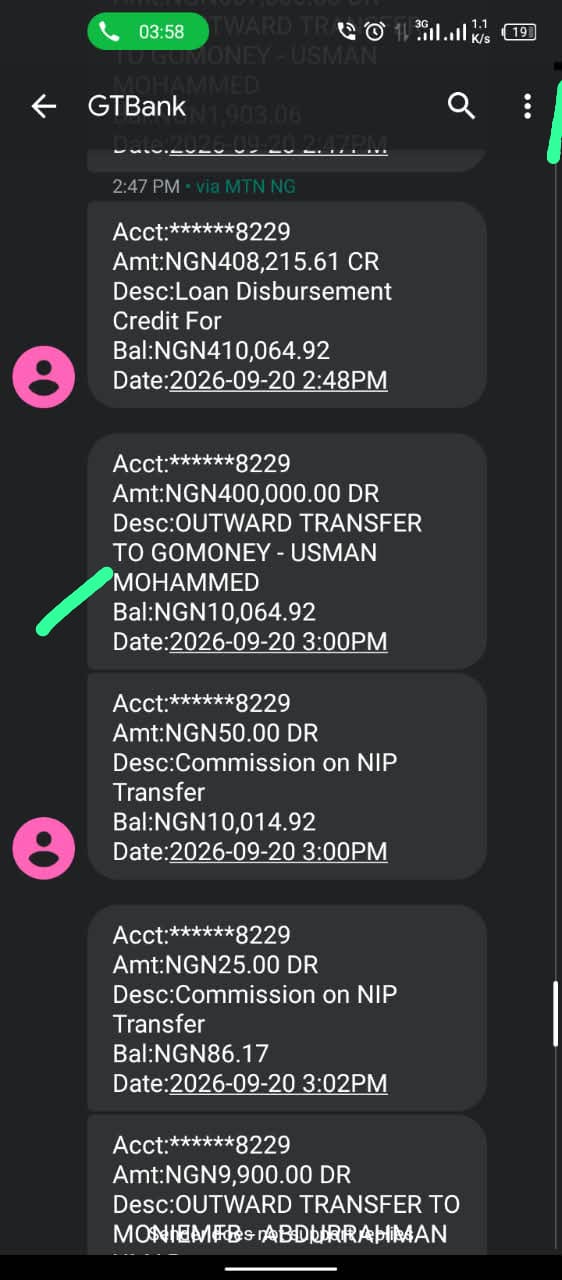
For a bettor, the payment journey appears deceptively simple. For salako ewekokori the money left his bank account. A betting wallet receives value. A wager is placed. If the customer wins or requests a withdrawal, money moves back toward a bank account. Behind that apparently simple sequence sits a chain of identity checks, transaction-status queries, account validation, fraud controls, reconciliation and settlement.
Nigeria Inter-Bank Settlement System (NIBSS) provides APIs for beneficiary name enquiry, direct credit, direct debit, transaction-status queries and balance enquiries. Those functions are not cosmetic conveniences. They form part of the machinery required to determine whether money actually moved and whether the receiving account received the expected value. For betting companies, this creates an uncomfortable commercial reality. A payment failure becomes a customer problem even when the operator did not cause the failure.
Reconciliation Is Where the Economics Become Interesting
The most expensive payment problem is not necessarily a slow transfer. It is uncertainty. Suppose a customer's account is debited but the betting wallet is not credited. Or a withdrawal request generates a transaction message but the receiving bank does not immediately reflect the expected result. The operator now has to establish what happened.
Was the customer debited? Was the transaction successful? Did the payment provider receive confirmation? Was the wallet credited? Should the transaction be reversed? Does the customer need to be refunded?
Every unresolved transaction can create another layer of customer-service work, financial reconciliation and operational exposure. NIBSS's own payment infrastructure recognises this problem. Its e-BillsPay framework provides a dispute-resolution process for failed transactions, including cases where a customer's account has been debited, with a stated 72-hour turnaround for dispute resolution. That is a useful reminder that instant payment does not mean instant certainty.
Real-Time Value Does Not Mean Continuous Settlement
This is where the mechanics of Nigeria's payment architecture become important. NIBSS describes NIP as an online real-time electronic funds-transfer platform. Customers can receive value immediately, but NIP operates as a Deferred Net Settlement system, with institutional settlement occurring through defined settlement sessions.
The distinction is easy to miss because the customer experiences the transaction as immediate. The banking infrastructure underneath it is more structured. That matters for businesses handling large numbers of transactions because payment operations involve more than pushing money from one account to another. Institutions must also manage transaction status, settlement positions, exceptions, reversals and reconciliation. The customer sees the notification. The finance department sees the ledger. Those are not always the same thing.
Fraud Controls Are Becoming Part of the Payment Product
Nigeria's payment regulators are also tightening the controls around instant transactions. In March 2026, the Central Bank of Nigeria (CBN) introduced new guidance requiring financial institutions to deploy real-time enterprise fraud-monitoring systems and strengthen online identity verification. The rules also introduced additional controls around instant-payment access and mobile-device authentication.
That direction has direct implications for gaming-related payment flows. Betting platforms can involve repeated deposits, withdrawals and account activity. That makes transaction monitoring, identity validation and anomaly detection operational requirements rather than back-office accessories. The commercial objective is therefore not simply to make payments faster. It is to make them fast, traceable and controllable.
Nigeria Is Already Building the Next Payment Rail
The infrastructure itself is moving. NIBSS has begun rolling out the National Payment Stack, reporting 26.55 million transactions worth ₦1.4 trillion across 48 participating institutions during its early rollout. NIBSS describes the system as an ISO 20022-compliant infrastructure intended to modernise the country's payment ecosystem, with capabilities including APIs, risk scoring and fraud-prevention functions. For betting operators, the significance is not that a new payment platform automatically solves their problems.
It is that the payment environment is becoming more data-rich and increasingly designed around interoperability, monitoring and machine-readable transaction information. That raises the standard for operators. A platform that treats payments as merely a checkout function risks falling behind one that treats payment intelligence as part of its core operating system.
The Margin Question Moves Beyond Betting Odds
Payment reliability ultimately affects more than technology departments. It can influence customer retention, support costs, fraud losses and the amount of operational manpower required to resolve exceptions. A customer who cannot fund an account may abandon a transaction. A customer waiting for a withdrawal may lose confidence.
Read the full dense multi-agency briefing on our Corporate master dashboard One Quadrillion in Volume: Why Small Payment Failures Are Draining Nigeria’s Betting Economics
Corporate leaders, founders, and analysts can track daily macroeconomic and tech policy briefings on their phones. Turn on the notification bell for our dedicated boardroom tracker: WHATSAPP CHANNEL