Nigeria has built a reputation for producing fintech startups, payment platforms, e-commerce businesses, logistics companies and increasingly, AI and deep-tech ventures.
But there is one part of the technology industry that still doesn't receive nearly enough attention:
Gaming.
And the question is becoming harder to ignore:
Why are Nigerian tech companies still so cautious about gaming?
This is not because Nigerians don't play games.
Quite the opposite.
Gaming is already deeply embedded in Nigerian culture. From football games and mobile games to esports, console communities and PC gaming, there is clearly an audience.
The problem is that playing games and building a sustainable game industry are two very different things.
Nigeria Has the Players
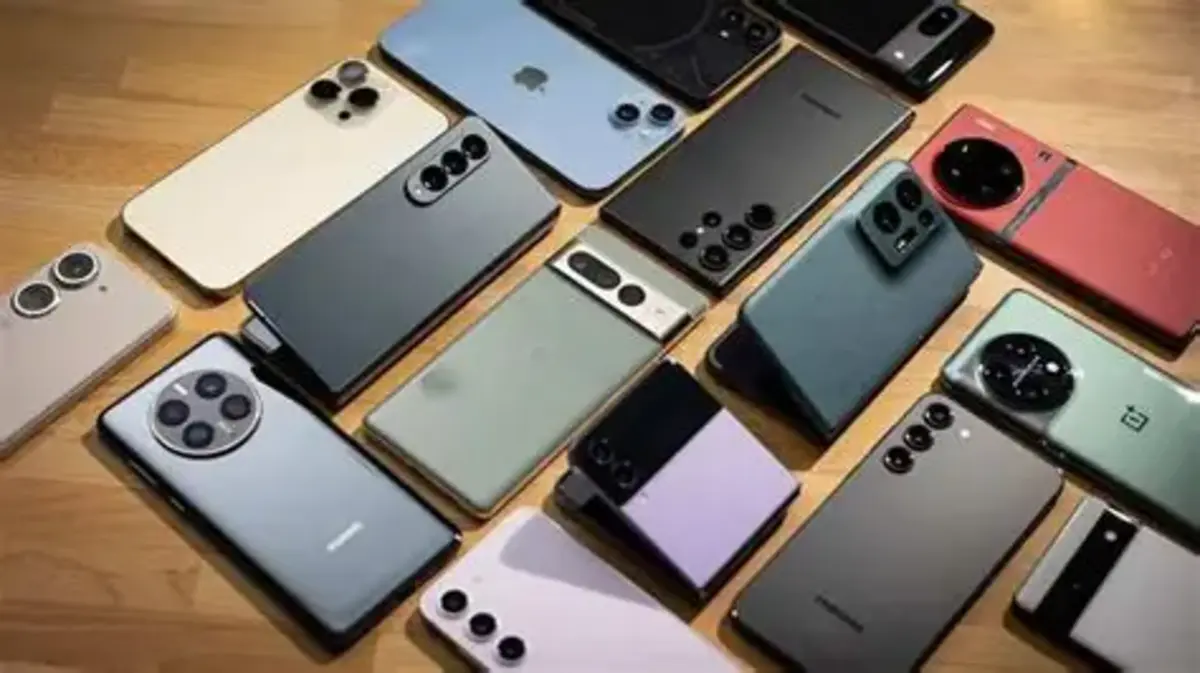
A September 2026 report by Analytics for Africa estimates that Nigerians spend approximately ₦41.3 billion annually on game consoles, accessories and physical games.
But there is an uncomfortable part of that number.
The study found that essentially all of the consoles, accessories and physical games covered in its marketplace research were imported, meaning much of that consumer spending does not flow back to Nigerian game developers.
That tells us something important.
Nigeria has a market.
What Nigeria still needs is a stronger local production ecosystem.
The Industry Is Not Starting From Zero
There are already companies trying to change this.
Lagos-based Maliyo Games, for example, has built mobile games aimed at African and global audiences and has worked on projects including Disney Iwájú: Rising Chef. The company also runs initiatives aimed at developing Africa's game-development ecosystem.
Nigeria also recently made its debut at Gamescom 2026 with a "Games from Nigeria" pavilion, bringing Nigerian developers, studios and publishers to one of the world's biggest gaming events.
So the question isn't whether Nigerian gaming talent exists.
It does.
The question is whether the wider technology ecosystem is prepared to support it.
So Why Are Companies Still Cautious? 1. Gaming is often seen as entertainment rather than technology
This may be the biggest perception problem.
When someone says:
"I want to build a fintech company."
People immediately think about payments, financial inclusion and billion-dollar markets.
When someone says:
"I want to build a game."
The response can still be:
"Is that really a business?"
That mindset needs to change.
Modern games require software engineering, 3D modelling, animation, artificial intelligence, networking, cloud infrastructure, cybersecurity, sound design, product design, storytelling, data analytics and complex monetisation systems.
Gaming is not the absence of technology.
Gaming is an intersection of technology and creativity.
- Funding is difficult
Game development can require significant upfront investment before a product generates meaningful revenue.
And African studios already operate within a difficult funding environment.
The 2025 Africa Games Industry Report found that only 3% of surveyed African game developers had received government funding, while access to specialised support programmes remains limited.
This creates a difficult cycle:
Limited funding → small teams → smaller projects → limited market reach → limited revenue → difficulty attracting larger investment.
Breaking that cycle requires investors who understand gaming as an industry rather than treating it simply as a hobby.
- Infrastructure matters
A game studio needs more than talented developers.
It needs reliable electricity, internet connectivity, suitable hardware, storage, cloud services and sometimes expensive GPUs and development equipment.
The African game developer survey identified power and affordable high-speed internet as major infrastructure requirements.
For esports, the problem becomes even more obvious.
If players cannot reliably access low-latency servers, consistent electricity or affordable high-speed internet, competitive gaming becomes significantly harder.
- There isn't enough specialised training
Nigeria has plenty of coding bootcamps.
But how many specifically teach:
Game development Game design Unity Unreal Engine 3D modelling Character design Game animation Game audio Interactive storytelling Game monetisation Esports management
That's an ecosystem gap.
And it presents an opportunity for Nigerian technology academies to expand beyond the traditional "learn web development and get a remote job" model.
Technology education providers such as TEKHUB can play a role here by exposing learners to a broader technology ecosystem and helping young people understand that software skills can be applied to industries beyond fintech and conventional web development.
You can explore TEKHUB's technology ecosystem at www.tekhub.ng.
What Nigerian Tech Companies Could Do Differently
Gaming doesn't necessarily have to start with a ₦500 million studio.
Companies could begin with:
Small mobile games.
Educational games.
African mythology and storytelling.
Local multiplayer experiences.
Gamification products for businesses.
Esports platforms.
Game development tools.
Animation and interactive media.
Gaming communities and infrastructure.
The goal should be to build sustainable businesses rather than simply producing games because they look cool.
And There Is a Bigger Opportunity
Nigeria has something many international studios cannot manufacture:
Nigerian culture.
Our languages.
Our music.
Our mythology.
Our cities.
Our humour.
Our football culture.
Our history.
Our stories.
These can become intellectual property.
The same way African music and film have become global exports, Nigerian games can potentially turn local stories into global interactive experiences.
And Nigeria is beginning to show more ambition in this direction. Industry events such as Lagos Games Week are bringing developers, educators, investors, policymakers and international partners together around the games economy.
The Real Question
Perhaps the question isn't:
"Why are Nigerian tech companies afraid of gaming?"
Maybe it is:
"What would happen if Nigerian technology companies finally took gaming as seriously as fintech?"
The country already has players.
It has developers.
It has designers.
It has storytellers.
It has a massive youth population.
What is still missing is a stronger bridge between those ingredients.
Nigeria doesn't need to become the next Silicon Valley of gaming overnight.
It simply needs to start building.
Because if Nigerians are already spending money on games, the next question should be: why shouldn't more of that value be created here too?